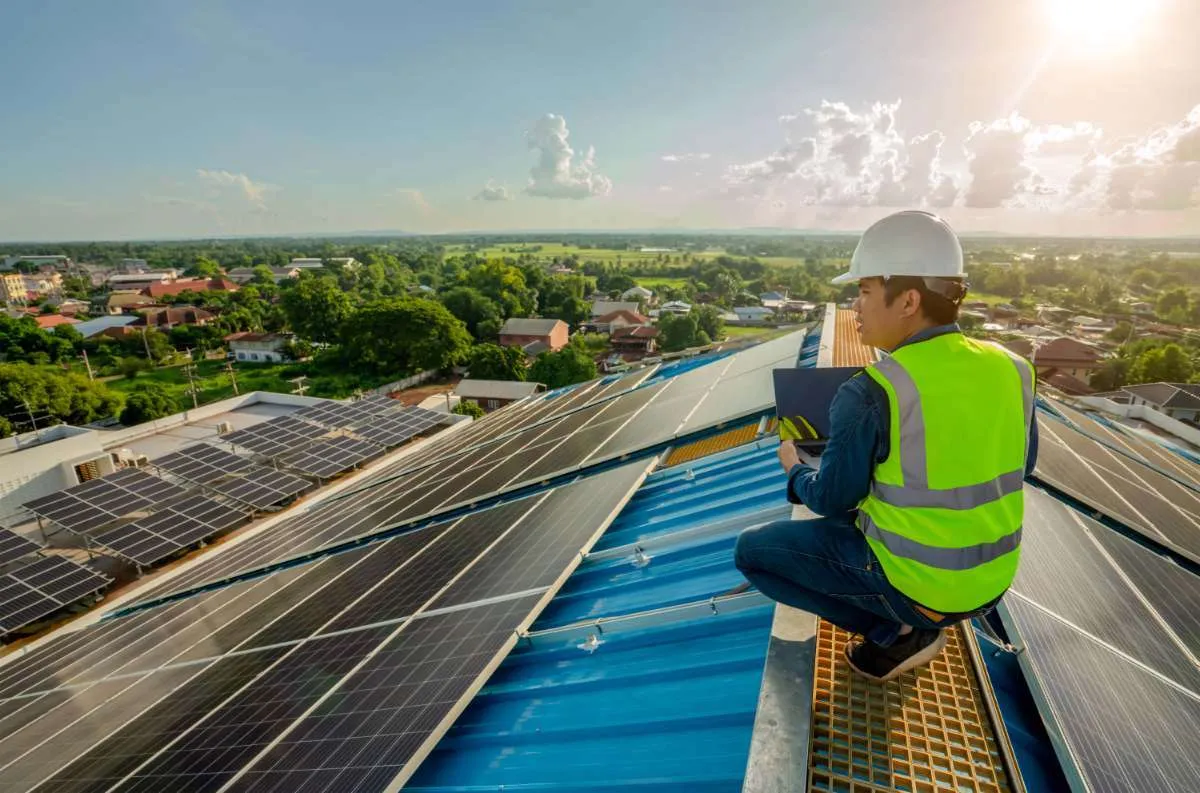
Skylight protection is an important part of rooftop safety wherever workers could be exposed to fragile rooflights during inspection, maintenance, cleaning, refurbishment or installation work. Although skylights provide valuable natural light inside a building, they can create a serious fall-through hazard if suitable precautions are not in place.
There is no single skylight protection system that is right for every roof. Depending on the type and condition of the rooflight, how frequently the roof is accessed and the work being carried out, protection could include permanent skylight covers, guardrails, temporary covers, designated access routes or personal fall protection.
Understanding these different options can help building owners and facilities teams create a more appropriate rooftop safety strategy. In this guide, we look at the main types of skylight protection, how they differ and what to consider when choosing a solution for a commercial or industrial roof.
Why Is Skylight Protection Important?
Skylights and rooflights can present a fall-through hazard because they may not be capable of supporting the loads that could be placed upon them during rooftop work.
This risk is not limited to visibly damaged rooflights. Age, weather exposure, UV degradation, deterioration and changes to the surrounding roof can all affect their condition over time.
Older industrial buildings can be particularly challenging because rooflights may become discoloured and difficult to distinguish from surrounding roofing sheets. A worker concentrating on another task could inadvertently move towards a fragile area without immediately recognising the hazard.
Workers do not necessarily have to deliberately step onto a rooflight to be at risk. Someone could slip, trip or lose their balance while working nearby and fall onto the fragile surface.
This means skylight safety should be considered as part of the complete rooftop access strategy rather than only when work is being carried out directly on the rooflight.
Are Skylights and Rooflights Considered Fragile?
A skylight should never simply be assumed to be safe to stand or fall onto.
Whether a particular rooflight is fragile depends on factors including its construction, material, installation, condition, age and manufacturer classification.
Material - Rooflights are manufactured from different materials with different performance characteristics. The material alone should not be used to assume that a rooflight can safely support a person.
Age - A rooflight that met the required performance criteria when installed may deteriorate during its service life.
Weathering - Exposure to sunlight, rain, temperature changes and other environmental conditions can affect roofing materials over time.
Installation - The performance of the complete rooflight assembly can also depend on how it has been installed and supported.
Condition - Cracks, impact damage, deterioration or previous repairs can affect the integrity of the rooflight.
Classification - Where reliable information about the rooflight's performance is available, this should form part of the roof risk assessment.
If there is uncertainty about whether a rooflight can withstand foreseeable loads, it should not simply be treated as a safe walking or working surface.
What Skylight Protection Options Are Available?
There are several ways of controlling the risk presented by fragile rooflights.
The main options include permanent protective covers, guardrails around rooflights, temporary skylight covers, controlled access routes and personal fall protection systems.
In some cases, several of these measures will be combined as part of a complete rooftop safety strategy.
Option 1 – Permanent Skylight Protection Covers
A permanent skylight cover creates a physical barrier over the rooflight itself.
Rather than preventing workers from entering the area around the rooflight, the system protects the fragile surface directly.
This approach can be particularly useful on commercial and industrial buildings where workers regularly need to move around the roof for activities such as plant maintenance, gutter cleaning and inspections.
Permanent covers can be appropriate where:
Roof access is frequent
Fragile rooflights are located near maintenance routes
Long-term protection is required
Workers need to move around the rooflight
The existing rooflight is suitable for the selected system
Kee Cover® provides permanent protection over suitable fragile rooflights.
Its mesh design creates a physical barrier over the rooflight while still allowing natural daylight to pass through into the building below.
Because the hazard itself is protected, workers can benefit from collective protection without needing to attach themselves to the cover.
Kee Cover® can form part of a wider permanent roof safety system alongside walkways, edge protection and safe access equipment.
Option 2 – Guardrail Protection Around Skylights
Instead of placing a cover directly over a rooflight, another option is to prevent workers from reaching the hazard.
A guardrail system creates a physical barrier around the rooflight or opening, establishing a protected zone that workers cannot inadvertently enter.
This can be particularly suitable for raised skylights, access hatches and Automatic Opening Vents where covering the opening would not be practical.
Guardrail protection is a form of collective protection because it does not depend on each worker attaching themselves to the system before it becomes effective.
Kee Dome® provides freestanding collective protection around suitable rooflights, hatches and openings.
Rather than covering the skylight itself, the system establishes a guarded perimeter around the hazard.
This can make Kee Dome® particularly useful where the rooflight needs to open, where access through the opening is required or where the shape of the skylight makes a conventional cover unsuitable.
The appropriate configuration will depend on the rooflight and how the surrounding area needs to be accessed.
Option 3 – Temporary Skylight Protection Covers
Permanent protection is not always necessary.
During temporary construction, maintenance, refurbishment or installation projects, the increased risk around a rooflight may only exist for the duration of the work.
A temporary skylight protection system can provide a practical alternative in these circumstances.
Typical applications include:
Solar PV installation
Roof refurbishment
Short-term maintenance
Roof surveys
HVAC installation
Cleaning
Repair projects
Once the work has been completed, the temporary protection can be removed and potentially reused on another suitable project.
CoverLite™ is a lightweight temporary protection system designed for suitable fragile rooflights.
Manufactured from GRP lattice, the cover weighs approximately 12.6kg and incorporates a high-visibility upper surface to make the protected area easier to identify.
Its open-lattice design allows natural daylight to continue passing through the rooflight while the cover is in place.
CoverLite™ uses a dedicated securing arrangement and can be removed once the temporary work has been completed. Where it remains in suitable condition following the required checks, it can be reused on future compatible projects.
The key distinction is simple:
CoverLite™ provides temporary protection, while systems such as Kee Cover® are intended to provide permanent protection.
What Do the Work at Height Regulations Say About Skylight Protection?
The Work at Height Regulations 2005 apply where there is a risk that a person could fall a distance liable to cause personal injury.
The Regulations establish a hierarchy for controlling work at height.
Where reasonably practicable, work at height should first be avoided. Where it cannot be avoided, steps should be taken to prevent falls. Where the risk cannot be completely eliminated, measures should be used to minimise the distance and consequences of a potential fall.
This is particularly relevant when working on or near fragile surfaces such as rooflights.
Work should be properly planned, appropriately supervised and carried out by competent people using suitable equipment. The assessment should consider the entire task, including how workers reach the roof, how they travel across it and the hazards they encounter on the way to the working area.
Where appropriate, collective measures that protect everyone accessing the area should be considered before relying solely on personal fall protection.
How Do You Choose the Right Skylight Protection System?
Choosing the right skylight protection requires more than simply measuring the rooflight.
The complete roof and the way people use it need to be considered.
How Often Is the Roof Accessed?
For a roof accessed only during a short project, temporary protection may be sufficient.
Where engineers, facilities teams or contractors access the roof regularly, permanent protection may provide a more suitable long-term solution.
What Type of Skylight Is It?
Flat, in-plane, raised and opening rooflights can require different solutions.
A protective cover may suit one rooflight while a guardrail arrangement may be more appropriate around another.
Is the Skylight Fragile?
Its condition, construction and available performance information should be assessed rather than assuming it is safe.
How Close Do Workers Need to Get?
If workers can remain well away from the hazard, controlled routes and other measures may form part of the solution.
Where people regularly work directly beside the rooflight, physical collective protection may be more appropriate.
Is Protection Temporary or Long Term?
Consider not only the immediate project but how the roof will be used afterwards.
A short-term requirement could favour CoverLite™, while repeated future access may support permanent Kee Cover® or Kee Dome® protection.
What Is the Roof Construction?
The roof substrate, profile, waterproofing system and surrounding structure can influence which products are suitable.
Are There Other Rooftop Hazards?
Rooflights should not be assessed in isolation.
The same roof may contain exposed edges, fragile sheets, changes in level, pipework, plant and other obstacles.
The safest solution considers the complete access route.
Skylight Protection for Different Roof Types
Different roofs can require different approaches to skylight protection.
Flat Roofs - Flat commercial roofs can contain raised domes, access hatches, AOVs and other openings. Covers or freestanding guardrail protection may be suitable depending on the hazard.
Metal Profile Roofs - Industrial metal roofs often incorporate in-plane rooflights that can become difficult to distinguish from surrounding sheets as they age.
Industrial Roofs - Factories, warehouses and distribution buildings can contain large numbers of rooflights alongside plant, gutters and maintenance routes.
Fragile Roofs - Where both the roof sheets and rooflights are fragile, the complete access method needs to be considered. A rooflight cover alone does not provide safe access across the surrounding fragile surface.
Commercial Roofs - Regular access for HVAC servicing, inspections and general maintenance can make permanent skylight protection particularly valuable.
Solar PV Roofs - Solar panels can introduce new access routes and increase maintenance activity, making it important to review existing rooflight protection when PV systems are installed.
Why Choose Safesite for Skylight Protection?
Safesite has provided fall protection and safe access solutions across the UK for more than 30 years.
Our approach considers more than the individual rooflight. We can assess how workers access, navigate and use the roof before identifying suitable protection for the hazards present.
Safesite's rooftop safety solutions include:
Skylight protection
Kee Cover®
Kee Dome®
CoverLite™
Roof edge protection
Kee Guard®
Rooftop walkways
Kee Walk®
Kee Mark® pathway guidance
Fall restraint systems
Fall arrest systems
Mansafe systems
Working at height equipment
Inspection and recertification
By considering the entire access route, Safesite can help create a rooftop safety strategy that reflects how the building is actually maintained.
Find the Right Skylight Protection for Your Roof
There is no single skylight protection system suitable for every commercial or industrial roof.
The right solution depends on the type and condition of the rooflight, how frequently the roof is accessed, the work being undertaken, the roof construction and the other hazards surrounding the working area.
For temporary projects, CoverLite™ can provide removable protection over suitable rooflights. Where long-term direct protection is required, Kee Cover® can provide a permanent solution, while Kee Dome® can create collective guardrail protection around suitable raised rooflights and openings.
These systems can also be combined with walkways, demarcation, roof edge protection and personal fall protection to create a more complete rooftop safety strategy.
Contact Safesite today to discuss your skylight protection requirements and find the most appropriate solution for your roof.